Missed Bail Payment? What Happens Next and How to Fix It
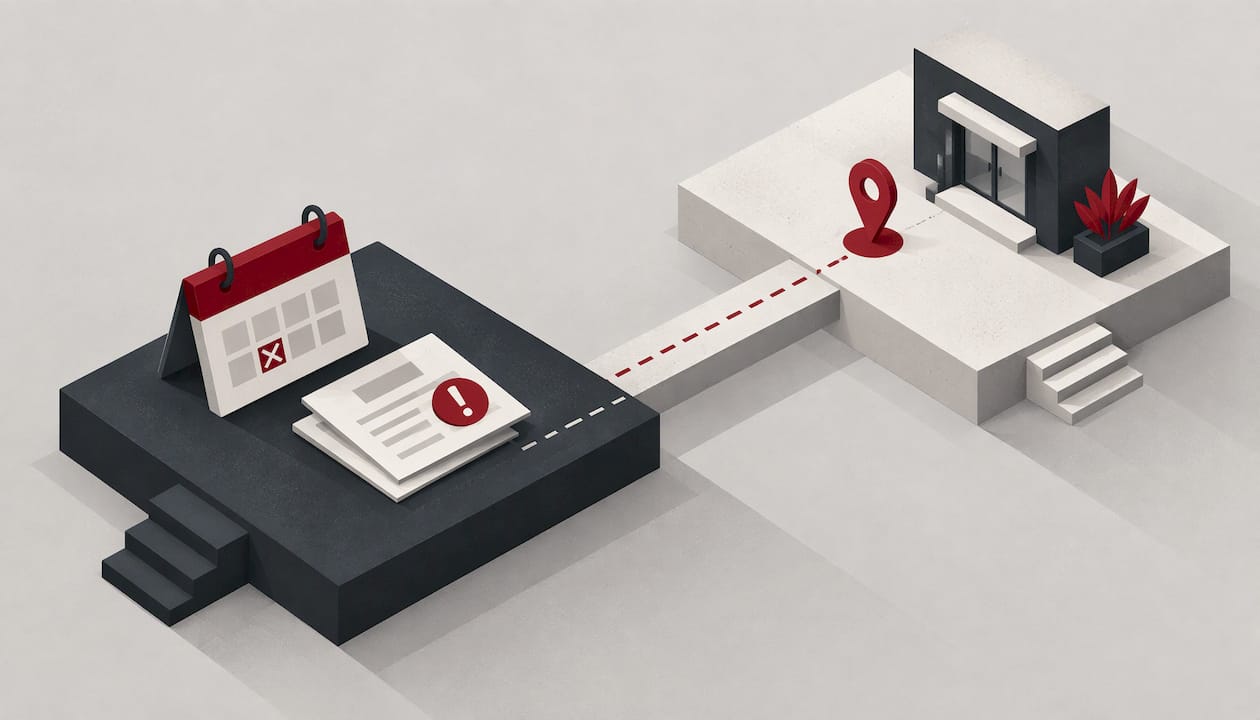
A missed bail payment is a problem you can usually solve, but only if you act before it grows. Call your bail bond agent right away, say what happened, and ask what it takes to get current. Silence is what turns a payment problem into a bond problem. If you are in Minnesota, we are available 24/7 across all counties and can walk you and any co-signer through the payment structure and what comes next.
This guide explains what “missed payment” can mean, how it differs from missing court, what the law says happens to a bond that goes into default, and what to do in the first 24 hours.
TL;DR
- A missed payment to your bail bond agent is not the same as missing a court date. Missing court is what triggers a forfeiture, where the court orders the bond paid.
- Contact your agent as soon as you know a payment will be late. Agents can only help with what they know about.
- Co-signers are the ones with money and collateral at stake, so they should know exactly what they signed.
- Get every payment, premium and piece of collateral documented in writing, with receipts.
- Minnesota families can call us any hour to review the bond, the payment plan and the next court date.
Table of Contents
- Two different things people call a “missed bail payment”
- What the premium and collateral actually are
- Why a late payment matters
- What happens when the bond itself goes into default
- Can a forfeiture be reversed?
- What to do in the first 24 hours
- If you cannot afford the payment
- The co-signer’s position
- Common situations
- Where we help
- Our perspective
- FAQ
- Sources
Two different things people call a “missed bail payment”
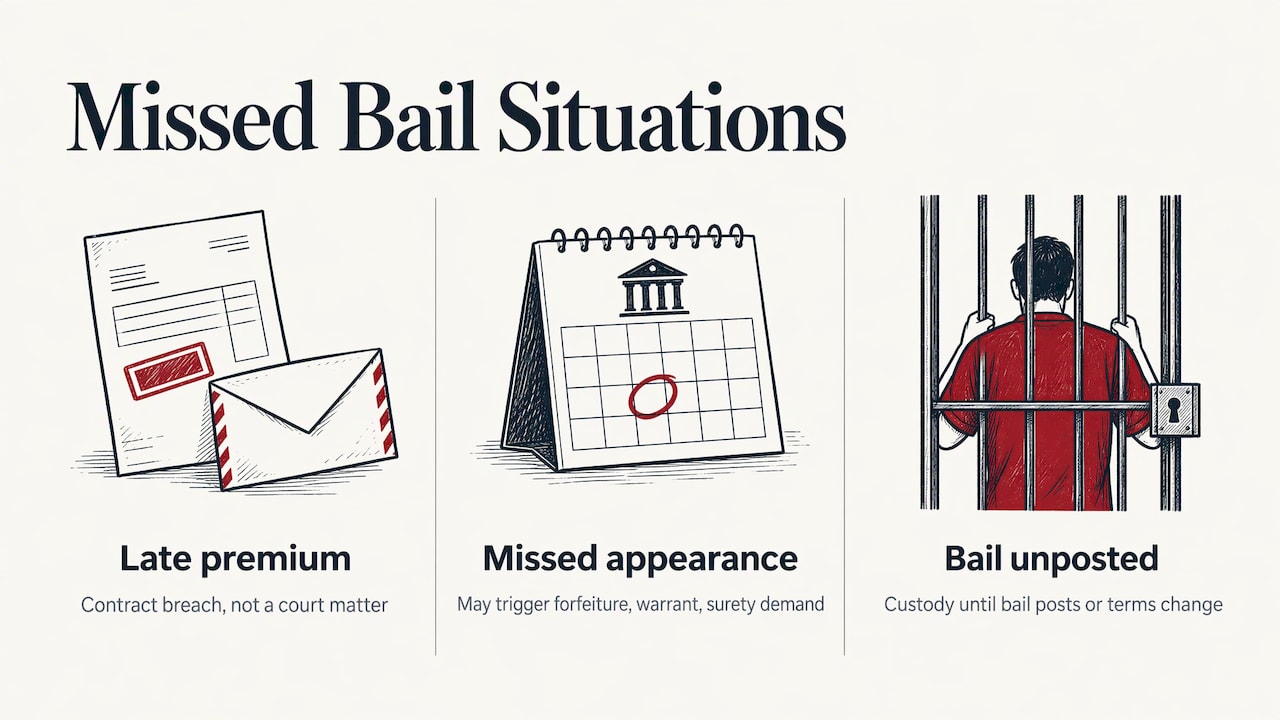
The phrase covers several situations, and the consequences differ for each.
1. A missed installment to the bail bond agent. When someone is arrested, a judge sets bail. A bail bond is a promise from a surety company, through its agent, that the full bail amount will be paid if the defendant does not follow the court’s orders. In return, the family pays the agent a fee, called the premium. If you agreed to pay that premium in installments, a missed installment is a breach of your contract with the agent. It is not a court matter by itself.
2. Missing a court date or a check-in. This is a breach of the bond’s conditions. It is the event that can lead to forfeiture, a bench warrant and a demand on the surety for the full bail amount.
3. Not paying court-set bail at all. If the bail was never posted, the defendant generally stays in custody until bail is posted or the court changes the conditions. Our guide to how to post bail in Minnesota covers that step.
Most people searching this phrase are in the first situation: a premium installment is late and they want to know how bad it is. The honest answer depends on your contract, so read it, and call your agent.
What the premium and collateral actually are
The premium is the fee for the bond. New York’s Department of Financial Services explains that the person who signs for the bond, the indemnitor or co-signer, pays the premium and may also pledge collateral, such as cash or property, as security. It also notes that the agent may keep the collateral if the bond is forfeited, and that the full premium must be refunded within 14 days in that state if the defendant is not released or is released without monetary bail. Rules differ by state, so treat that as an example of how consumer protection works rather than a Minnesota promise.
On our side, the Minnesota surety bond premium is listed from $100, one-off, and the exact amount depends on the bond. You can estimate your own case with our Minnesota bail bond calculator.
Why a late payment matters
A payment plan is built on trust that the agent can reach you and that the arrangement will be honored. When a payment is missed:
- The agent cannot tell whether you are in hardship or have disappeared.
- The co-signer, who is responsible under the contract, becomes the first person the agent turns to.
- The agent may review whether the bond arrangement should continue.
Bond conditions are often tied to more than money. Utah’s administrative rules, for example, list grounds for immediate bail bond revocation, including false information on the application, a material change in collateral, the defendant changing address, phone or employer without reasonable notice, a new arrest, or failure to appear. The same rule says the defendant, the co-signer or both are responsible for the costs of returning the defendant to court. Utah’s list is one state’s rule, but it shows why agents care about being kept informed: contact details and stability are part of what makes a bond workable.
The same Utah rule also protects depositors: where the same collateral secures both the fee and the face amount of the bond, it may not be converted until the bond is exonerated or a judgment is entered against the agency, and the depositor has had at least 15 days to pay fees owed. That is a good reminder to ask exactly how your collateral is held and when it can be used.
What happens when the bond itself goes into default
If the underlying problem is a missed court date, the legal process is more formal. Minnesota law, Minn. Stat. § 629.58, says that when a person under bond fails to perform its conditions, the default must be recorded and the court issues process against the persons bound by the bond, as the prosecuting officer directs. After default, a surety may, with the court’s permission, pay the county treasurer or court administrator the amount for which it was bound, plus costs, before or after process is issued. Payment fully discharges the surety from the bond.
In plain terms: once a default is recorded, money is demanded from the surety, and the surety looks to the co-signer and collateral under its contract. That is why the co-signer should never treat a missed court date lightly.
Other states show what the timeline can look like. These are not Minnesota rules, but they illustrate how forfeiture works:
| State | What the statute or court materials say |
|---|---|
| Florida | The clerk must notify the surety within 5 days of a forfeiture for failure to appear, and the forfeiture must be paid within 60 days after notice, under Chapter 903 (2026). |
| Michigan | The court must notify the surety within 7 days of the failure to appear. If the defendant does not surrender within 28 days of revocation, judgment may be entered for up to the full bail amount plus costs. |
| Texas | A judgment nisi, a provisional order, starts the forfeiture and becomes final unless good cause is shown for the absence. |
The pattern is the same everywhere: a missed appearance starts a clock, and the clock is the reason to act fast.
If court is what was missed, read our page on what happens after a missed court date in Minnesota and how Minnesota bail refunds and forfeiture work.
Can a forfeiture be reversed?
Often there is a window to fix things. Michigan’s statute, MCL 765.28, provides that the court shall set aside the forfeiture and discharge the bond within 1 year if the defendant is apprehended, the ends of justice are not thwarted and the county is repaid its apprehension costs, with a stated exception when apprehension comes more than 56 days after forfeiture without full payment. Procedure also protects sureties: in People v. Stanford (2016), the Michigan Court of Appeals found that notice mailed one day past the seven-day deadline meant the surety could not be required to pay the $10,000 bond.
The lesson for families is not to count on a technicality. It is that deadlines exist and that the fastest fix is getting the defendant back before the court, with the agent involved from the first day.
What to do in the first 24 hours
Here is the routine we would give a friend.
- Call your bail bond agent, by phone. Say which payment was missed and why. A phone call starts a conversation; a text can sit unread.
- Pull out your paperwork. Find the indemnity agreement, payment schedule, receipts and any collateral list. Know the amount, the due dates and what was pledged.
- Confirm the next court date. Make sure the defendant knows the date, time and courtroom. If you are unsure, our Minnesota jail roster guide can help you locate records and custody status.
- Make a partial payment if you can. Offer what you have and propose a date for the rest. Agents generally prefer a plan to a silence.
- Keep contact details current. If the defendant has moved or changed a phone number, tell the agent immediately.
- Ask for written receipts. The New York consumer page describes entitlement there to signed receipts listing all premiums and collateral, and a second receipt when money or collateral is returned. Keeping your own paper trail is wise in any state.
- Never ignore a court date. A missed payment can be negotiated. A missed appearance starts a legal process.
If the defendant has already missed court, call right away. Our failure to appear bail bonds page explains what we help with when a warrant is in play.
If you cannot afford the payment
Hardship is common, and it is better said out loud than hidden. When a family calls us before a payment lapses, we can go through the payment structure and the cosigner’s obligations together. We offer bail bond payment plans, and our team explains payment terms upfront so there are fewer surprises later. If your situation has changed, such as lost hours or an unexpected bill, explain exactly what changed and when you can pay.
You can also read our guide on what to do if you can’t afford bail for the larger picture, and how bail bonds work in Minnesota if the terms in your contract are unfamiliar.
The co-signer’s position
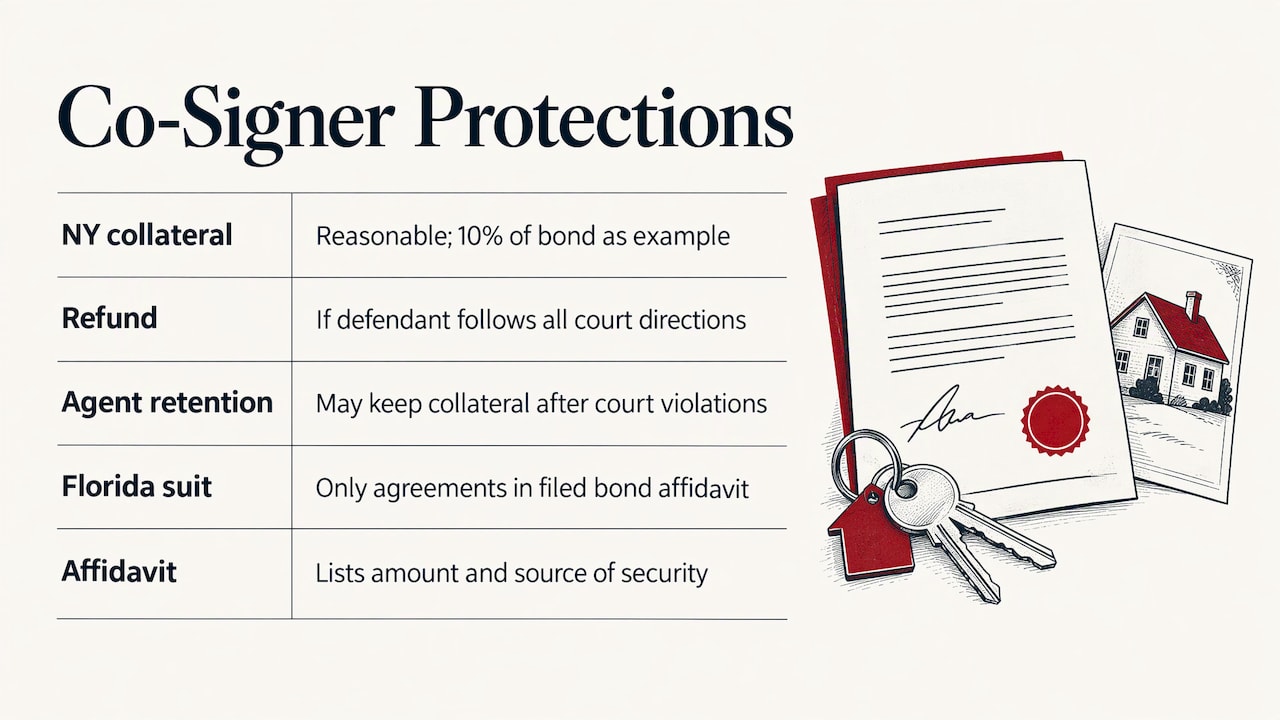
If you co-signed, the bond is partly yours. You may have put up money or property as collateral. New York’s consumer guidance describes collateral as something that should be reasonable, such as 10% of the bond amount in that state, and the New York City consumer bill of rights says collateral is refundable when the case is over if the judge decides the defendant followed all court directions, whether the defendant is convicted or acquitted. The same document says the agent may keep it if the defendant violates court orders, such as failing to appear.
Florida shows another kind of protection: under Florida Statutes § 903.14, a surety may sue an indemnitor only on agreements set out in the affidavit filed with the bond, which states the amount and source of the security received or promised. Minnesota’s rules differ, so use these as prompts for questions to ask, not as promises about your contract.
Our article on cosigner responsibilities lists what a co-signer typically agrees to. As a co-signer, your best moves are to stay in touch with the defendant, confirm court dates, and call the agent the moment anything goes wrong.
Common situations
“I paid the premium in full but missed a check-in.” Contact your agent right away. Check-ins and court dates are conditions of the bond, so treat them as seriously as payments.
“I can’t reach the defendant.” Tell the agent immediately. Provide last known addresses, workplaces and phone numbers. The sooner the agent knows, the more options remain.
“The defendant was arrested again.” A new arrest can affect the bond, so call before assuming anything. We handle many charge types, including DWI, felony, misdemeanor and probation violation cases.
Where we help
If you are in Minnesota and a payment or court date has slipped, our team can review your situation any hour of the day. We have more than 40 years of experience, assist directly with local jails and courts, and explain bond options, payment structures and co-signer obligations upfront. Start with our Minnesota bail bond services page or call us from the GPS Bail Bonds home page.

Our perspective
Most families who call us about a missed payment are not trying to dodge anything. They are overwhelmed, a paycheck came late, or they did not realize how the contract worked.
That is why we explain the bond, the payment structure and the co-signer’s obligations before anything is signed. A family that understands what it agreed to can make a plan when money gets tight, and a family that is surprised tends to go quiet.
Our advice never changes: call early, keep the court dates, and keep us informed. We are here around the clock, in every Minnesota county, to get you through the process.
Blog
FAQ
What happens if you miss a bail bond payment?
It depends on your contract, but the first consequence is usually a conversation with your agent about getting current. The larger legal consequences come from missing court, not from a late installment. Call your agent before the due date passes if you can.
Is a missed payment the same as skipping bail?
No. Missing a premium installment is a contract matter between you and the agent. Missing a court date breaches the bond’s conditions and can lead the court to record a default and demand payment on the bond, as Minnesota law describes.
Can the co-signer lose collateral?
Possibly. Official consumer guidance in New York explains that an agent may keep collateral if a bond is forfeited, while collateral is returnable when the defendant has followed all court directions. Ask your agent exactly what you pledged and when it would be returned.
What should I do if I can’t reach my bail bondsman?
Keep calling, and make sure the defendant attends every court date in the meantime. If your bond is with us, call our 24/7 line and we will review your case.
Sources
- Bail Information for Consumers, New York Department of Financial Services
- Minnesota Statutes § 629.58
- Utah Administrative Rule 1394
- Florida Statutes, Chapter 903 (2026)
- Michigan Bond Forfeiture benchbook chapter
- Michigan Compiled Laws § 765.28
- People v. Stanford, Michigan Court of Appeals (2016)
- Bond Forfeitures, Texas Municipal Courts Education Center (2024)
- Bail Bond Consumer Bill of Rights, NYC Department of Consumer and Worker Protection