Lac qui Parle County Jail Roster: How to Search and What It Means
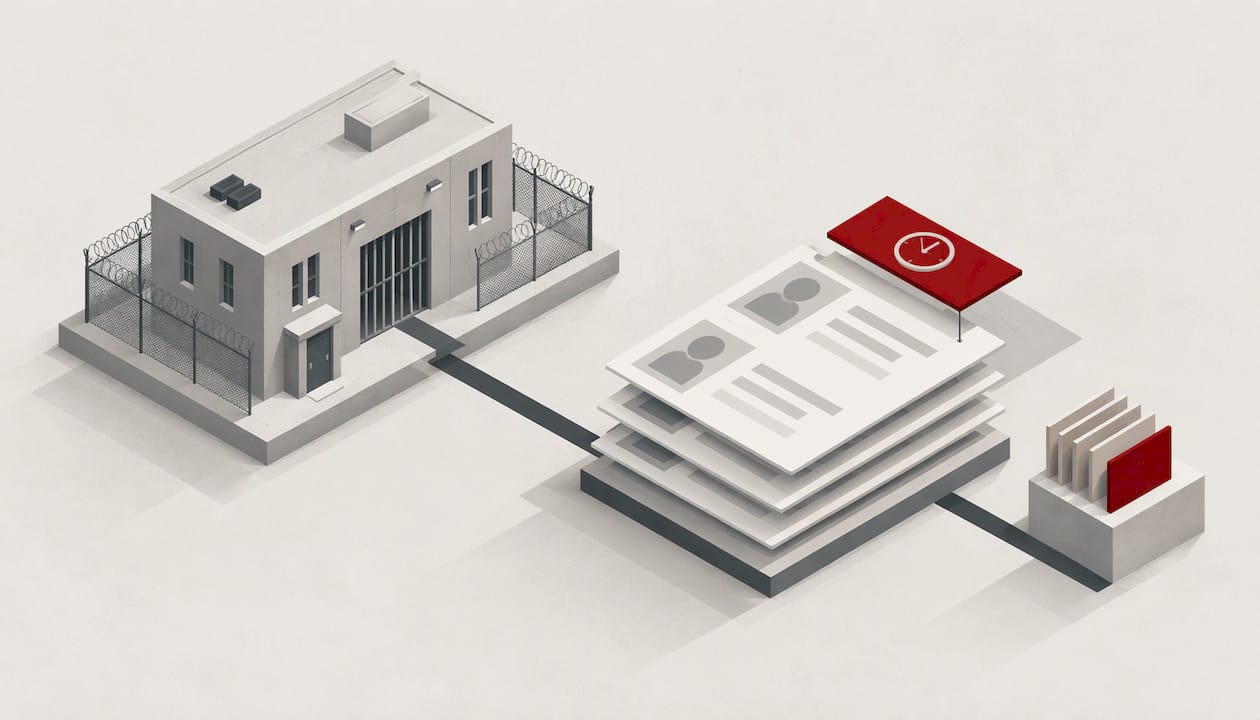
The Lac qui Parle County (often shortened to LQP) jail roster is published by the county itself on its custody list. It shows who is in the jail in Madison, Minnesota, with booking numbers, intake dates, charges and bail amounts. If someone you love appears there with a bail amount, you can start getting them released today. This guide shows how to read the page, what to do when a name is missing, and how a bail bond fits in once you know the amount.
TL;DR
- The official LQP custody list is at mail.lqpco.com/letg/custody.html. It lists names, ages, booking numbers and intake dates, and it carries a timestamp so you can see how fresh it is.
- Charges marked COURT/PENDING are not convictions. Bail or bond amounts are listed separately from amounts already received.
- If a name is not on the roster, call the Sheriff’s Office at 320-598-3720. Dispatch is staffed 24/7.
- A commercial bond typically costs a nonrefundable 10% fee, and a co-signer can owe the full bond amount if the defendant misses court.
- Once you have a bail amount, we can walk you through bond options, payment structure and co-signer duties at any hour.
Table of Contents
- Where to find the Lac qui Parle County jail roster
- How to read each column
- What to do if the name is not on the roster
- What happens between arrest and release
- Two ways to pay bail
- What a co-signer is agreeing to
- Matching the bond to the charge
- Hire a defense attorney early
- Our view: speed and clarity matter most in the first hours
- Ready to arrange the bond?
- FAQ
- Sources
Where to find the Lac qui Parle County jail roster
The Lac qui Parle County Sheriff’s Office runs the county jail, and the roster lives on the county’s custody page. The page is a simple table. When we reviewed it, it was stamped November 23, 2026, at 13:12, which is a useful reminder that the list is a snapshot. It is not a live feed, and anyone booked or released after that timestamp will not be reflected until the page refreshes.
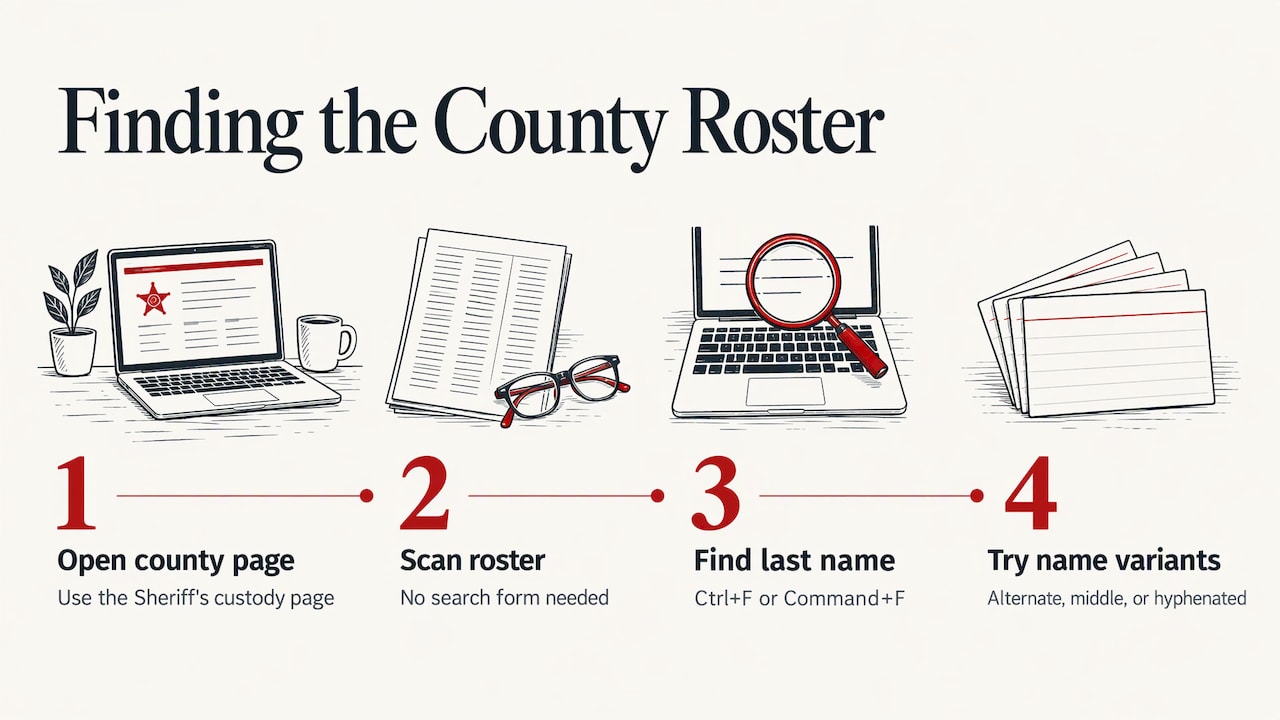
The table is short because it is a small county jail. You do not need a search form. Scan the names, or use your browser’s find function (Ctrl+F on Windows, Command+F on a Mac) and type the last name. Try alternate spellings, a middle name or a hyphenated surname if nothing turns up.
You may also see this called the “LQP jail roster” or “LQP county jail roster.” They all point to the same county list. Third-party sites that republish arrest photos and names often copy booking data late, and they can be wrong or out of date. For a decision as time-sensitive as bail, work from the county’s own page.
How to read each column
A roster entry is shorthand. Here is what each part tells you.
| Roster item | What it means for you |
|---|---|
| Name and age | Confirms you have the right person. Check the age if the name is common. |
| Booking number | The jail’s ID for this particular arrest. Have it ready when you call, because staff can find the record faster. |
| Intake date and time | When the person was booked in. It starts the clock on the first court appearance. |
| Charge | Shown as COURT/PENDING on the November 23, 2026 snapshot, meaning the case has not been decided. |
| Bail/bond amount | The amount a judge or the jail’s release schedule has set for release. |
| Amount received | Money already paid toward that bail. |
| Notes | Release conditions. Read these before you pay anything. |
The notes column matters more than most families expect. In the November 23 snapshot, for example, one entry on a pending DWI charge showed a bail amount of $12,000 and a note that an electronic alcohol monitor (EAM) had to be in place to release the person. Paying the bail alone would not have opened the door. The condition had to be met too. If you see a note like that, ask the jail what is needed before you arrange payment, so you do not pay for a release that cannot happen yet.
What to do if the name is not on the roster
A missing name does not mean the person was not arrested. Common reasons include a recent arrest that has not been added yet, a person who is being held in a different county or in a transport hold, or a name spelled differently in the booking record.
Work through these steps in order:
- Check the timestamp at the top of the roster and compare it to when the arrest happened.
- Try spelling variations, nicknames and maiden names.
- Call the Sheriff’s Office at 320-598-3720. According to the Sheriff’s Office page, dispatch is available 24/7, and office hours are Monday through Friday, 8:30 a.m. to 4:30 p.m. Outside those hours, ask dispatch.
- Ask three things: whether the person is in custody there, what the bail amount is, and whether any release conditions apply.
The office is in the Government Center at 911 8th Avenue, Madison, Minnesota 56256. The mailing address is 911 8th Avenue, Suite 1, Madison, MN 56256. Phone is faster than a visit in nearly every case, since you can ask your questions without driving to the jail.
If the person was arrested in another county, you will need that county’s roster instead. Our Minnesota jail roster and inmate search guide explains how to look people up across the state.
What happens between arrest and release
Most families want to know how long this will take. Under LawHelp Minnesota’s September 2026 guidance, a person who is detained must see a judge within 36 hours. That count leaves out the day of the arrest, Sundays, and state or federal holidays. A holiday weekend can therefore stretch the wait.
At that hearing, the judge can order:
- unconditional release, with no bail and no conditions;
- conditional release, where the person goes home but must follow rules such as no contact with a named person or alcohol monitoring;
- release only if bail is posted.
The same guide lists what judges may weigh: the facts of the case, the charge, the strength of the evidence, family and community ties, employment, mental health, criminal history, prior failures to appear, and any safety risks. That is one reason the amount on the roster can differ from what you expected, and why it can change after the first hearing. For a plain-language walk-through of the booking stage, see our guide to the jail booking process.
Two ways to pay bail
Once there is a bail amount, you have two routes.
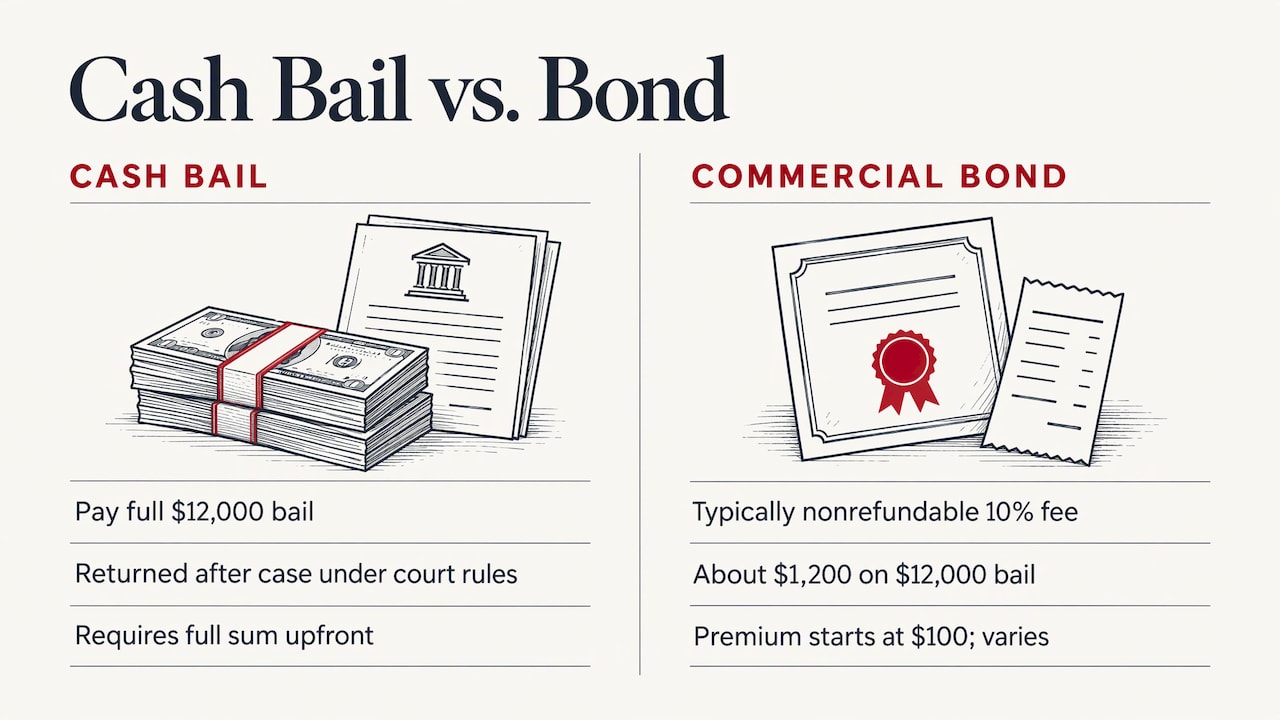
Full cash bail. You pay the entire amount at once. LawHelp Minnesota says to confirm accepted payment methods with the local jail, so call before you show up with money. Cash bail is returned at the end of the case under the court’s rules, but you must have the full sum on hand.
A commercial bond. A bail bond agent posts a surety bond for the person. According to the same LawHelp Minnesota guide, the fee is typically a nonrefundable 10% of the bail. On a $12,000 bail, that would be about $1,200. Our surety bond premium starts from $100 one-off, and the exact amount depends on the bail set. You can estimate it with our Minnesota bail bond calculator.
For most families, a bond is the practical answer because it avoids tying up the whole amount while a case moves through court. Our guide on how bail bonds work in Minnesota covers the mechanics in more detail.
What a co-signer is agreeing to
The person who signs for a bond takes on a real obligation, and it is better to know it before signing than after. LawHelp Minnesota explains that if the defendant does not come to court and the bonding company has to pay, the signer may owe the company the full bond amount. It also warns that bond contracts can include conditions such as searches, tracking, and access to private information, and that signers should understand those risks.
So the right question for any agent is not only “what does it cost?” but “what exactly am I agreeing to?” We explain bond options, payment structure and co-signer obligations up front, before anything is signed. Co-signing is a good fit when you trust the defendant to make every court date and you are ready to help them do it. Practical habits help: put court dates in your phone, confirm the time and courtroom, and arrange a ride.
Matching the bond to the charge
The roster charge tells you which kind of help you need. We write bonds for misdemeanors, felonies, DWI, drug, assault and domestic assault charges, as well as probation violations, warrants and failures to appear.
- A DWI often comes with release conditions like the alcohol monitor described above. See our DWI bail bonds page.
- A domestic assault arrest can carry no-contact conditions that shape where the person can go after release. Read about domestic assault bail bonds.
- Felony charges often involve larger bail amounts, so the premium and co-signer terms deserve a careful look. See felony bail bonds.
Hire a defense attorney early
A bond gets a person out of jail. It does not defend the case. LawHelp Minnesota advises finding a lawyer as soon as possible, ideally before the first court date, and speaking with one while waiting to see a judge. Have the following ready when you call a Minnesota criminal defense attorney: the booking number, the charge on the roster, the arrest date, the person’s job and family ties, any prior record and any past missed court dates. Those are the same factors a judge weighs on bail, so a lawyer can use them at the first hearing.
Our view: speed and clarity matter most in the first hours
Families usually find the roster in a panic, late at night, and with only half the facts. We have spent more than 40 years helping Minnesota families through exactly that moment, and we built our approach around the questions they ask first.
The first is whether the person is really in custody and what the bail is. The roster and the Sheriff’s Office answer that. The second is what it will cost and what they are signing. We explain bond options, payment structure and co-signer obligations before anything is signed, so nobody is surprised later.
The third is who will deal with the jail. We help with local jails and courts, and our line is open 24/7 across Minnesota, because arrests do not wait for business hours. Our job is to take the process off your shoulders so you can focus on the person you love.
Blog
Ready to arrange the bond?
If you have found the name on the LQP roster and know the bail amount, call us. We cover all Minnesota counties, around the clock, and we can explain the bond options, the payment structure and what a co-signer takes on. Our surety bond premium starts from $100 one-off. We also offer payment plans and help locating inmates. Start at GPS Bail Bonds, or see our full list of Minnesota bail bond services.

If you want to understand the whole path first, read how to post bail in Minnesota or our guide to getting someone out of jail.
FAQ
Is the Lac qui Parle County jail roster updated in real time?
No. It is a snapshot with a timestamp. The version we reviewed was stamped November 23, 2026, at 13:12. For anything that happened after the timestamp, call the Sheriff’s Office at 320-598-3720.
Does COURT/PENDING mean the person was convicted?
No. It means the charge is still before the court and has not been decided. The person is held on that charge while the case moves forward, or until bail is met.
Can I call the jail at night to ask about a bail amount?
Yes. The Sheriff’s Office lists dispatch as available 24/7, while its office hours run Monday through Friday, 8:30 a.m. to 4:30 p.m. Have the full name and, if you can, the booking number ready.
How much does a bail bond cost?
LawHelp Minnesota says a commercial bond typically carries a nonrefundable fee of 10% of the bail. Our surety bond premium starts from $100 one-off, and you can estimate yours with our bail bond calculator.
What if the person is not in LQP custody?
They may be held in another county or may not have been booked yet. Call the Sheriff’s Office to confirm, then check that county’s roster. We can help locate someone in custody anywhere in Minnesota.
Sources
- Lac qui Parle County custody roster
- Lac qui Parle County Sheriff’s Office
- LawHelp Minnesota: I Got Arrested. What Happens Now?